
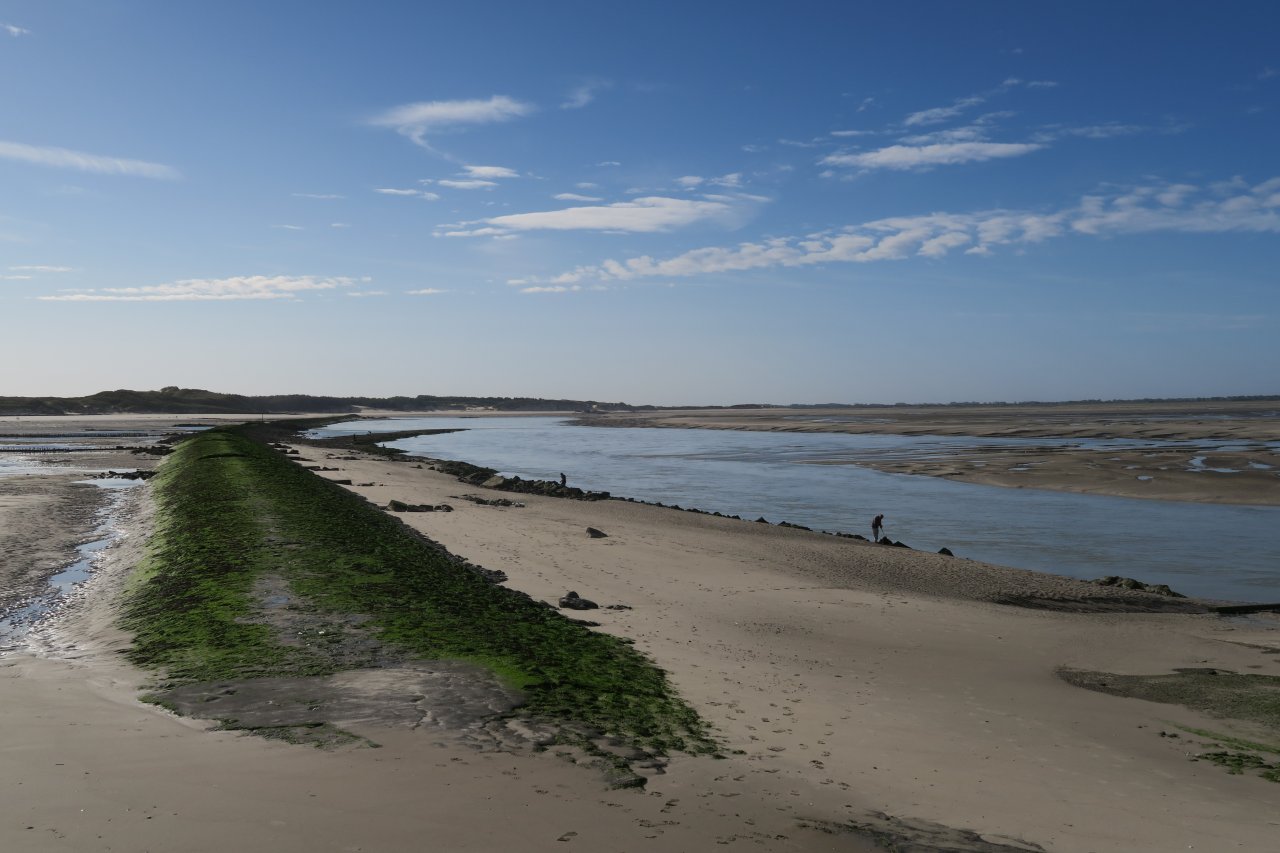
Each day there are two high tide cycles and two low tide cycles. Between each cycle, there is a slack water period, when there is no current. It lasts about twenty minutes.

Although every effort has been made to ensure the accuracy of the tide tables, errors may still occur. We accept no liability for any inaccuracies, nor for any accidents or damage that may result from them. Source of our data: https://maree.shom.fr/

During high tides, the Promenade Professeur Jean Debeyre, which connects the central beach to the Baie d'Authie, may be flooded. For your safety, barriers are placed on both sides of the promenade to prevent access to the promenade (see decree no. 2018-674)
Tides are mainly caused by the gravitational pull of the Moon and the Sun on the Earth’s oceans. Depending on their relative positions, this pull varies, which affects the height of the tides. When the tidal coefficients are above 90, these are known as spring tides.
These tides can be impressive and are a real spectacle to watch and photograph...
That is why it is crucial to remain vigilant:
- Rapid rise in water levels: Spring tides can submerge areas accessible at low tide within minutes.
- Strong currents: Tidal currents are powerful and can sweep away even experienced swimmers.
- Slippery surfaces: Rocks and seaweed become very slippery at low tide.
- Follow the local safety instructions displayed at potentially dangerous locations.

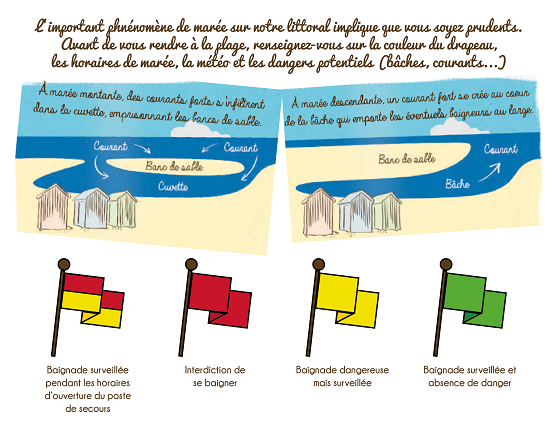
Be careful to the tide timetable! When the sea is rising, strong currents come in basins and surround the sand banks.
When the sea is picking up, a strong current empties the basins and could sweep you away. Look after the flags at the first-aid post:
Red/Yellow: supervised bathing during the opening hours of the first aid post
Red: Bathing prohibited
Yellow: supervised bathing, danger
Green: supervised bathing, no danger
Supervised bathing area delimited:
- to the south by the extension of Avenue Francis Tattegrain
- to the North by the extension of Rue Lavoisier
Supervision is provided from 1 July to 31 August.

- Don't go too far from the shore, and don't overestimate yourself. Swimming in the sea can be dangerous due to currents and waves.
- If you are caught in the current, do not swim against it but let yourself be carried to try to reach the beach.
- In hot weather, avoid the 12-4pm time slot, especially with children. When swimming, get wet gradually to avoid thermal shock.
- Remember to protect yourself and your children from the sun with sun cream, a hat or a cap. Moisturise regularly and apply cream every two hours.
- Give the children a landmark (e.g. totems installed on the beach) and equip them with a bracelet with your telephone number.
- Keep a constant watch on children on the beach as well as in the water, in case of emergency contact the sea rescue service at 196.